

I was leading a photography tour to Uganda, and we were staying at Embogo Lodge, in the Ishasha sector of Queen Elizabeth National Park. When we arrived, there was a tree full of empty black-headed weaver nests. Dozens of them hang from the branches. They were beautifully woven, perfectly shaped — and completely empty.
My first thought was simple: wouldn’t it be amazing if the colony were alive and we could photograph them?
We left for an afternoon game drive to search for wildlife across the Ishasha plains. Elephants, lions, topis, buffalo — the usual rhythm of safari life. When we returned to the lodge, it was already dark. We had a nice dinner, and then it started to rain.
Later, back in my room, I suddenly heard something just outside. Branches cracking. I grabbed my flashlight and stepped onto the veranda. Just a few metres away, there was a huge elephant, calmly gorging on the bushes around my cottage. When I lit him up, he paused for a second and then moved quietly back into the bush.
What a cool sight. Africa never really sleeps.
The next morning, we were having breakfast on the terrace. Coffee in hand. Soft light after the rain. Suddenly, we heard intense bird chatter. We looked up — and there they were. The black-headed weavers had returned. Hundreds of them. The tree that had been silent the day before was now bursting with life. Birds were building and repairing nests, fighting each other, carrying fresh grass, or grooming their wet feathers from the night’s rain.
And the best part? The tree stood so close to the terrace that we could simply walk to the fence and photograph the birds at eye level. Excellent photography. With a cup of coffee and a proper breakfast.
Black-Headed Weaver Photos


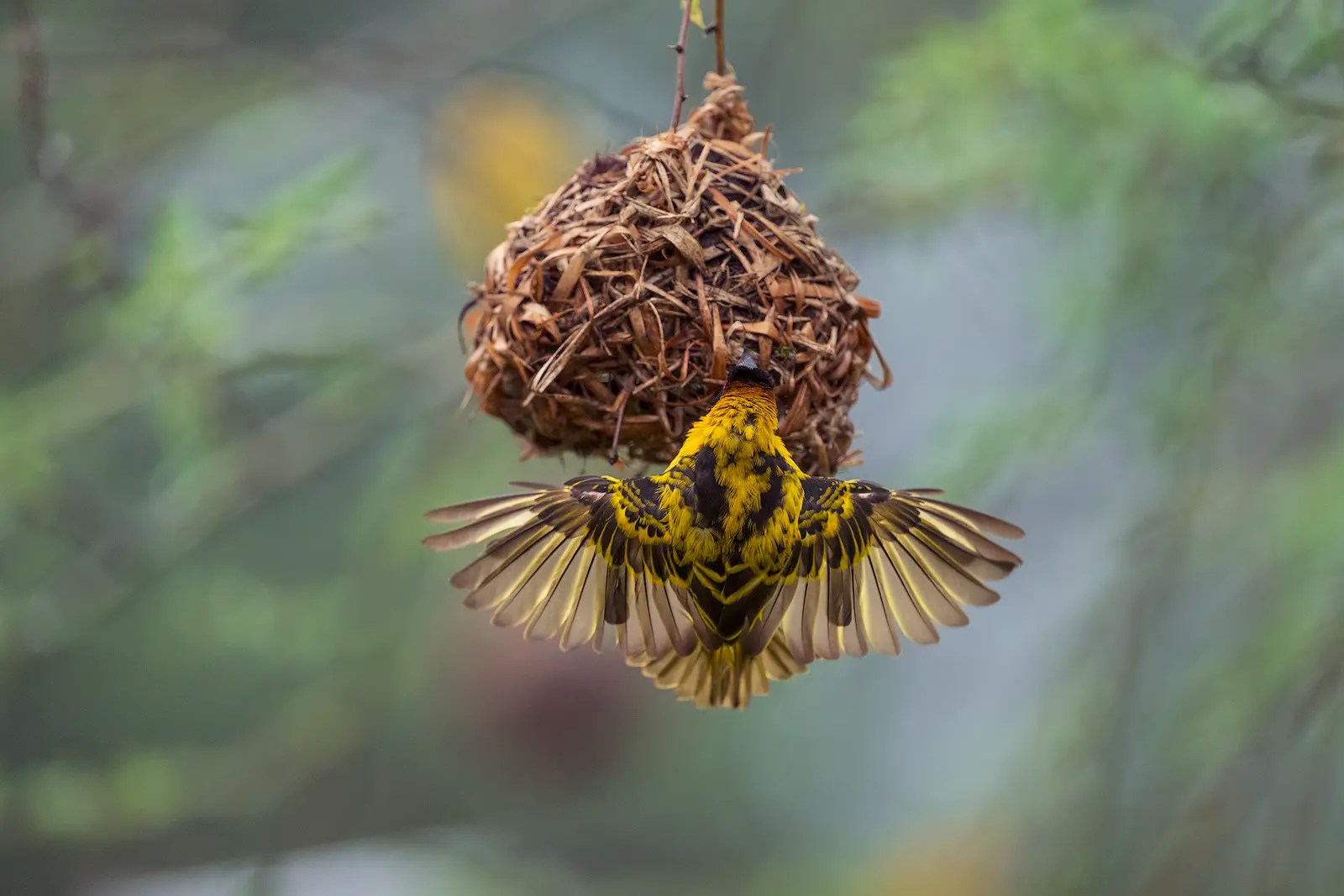


Watching them, I couldn’t help comparing them to our sparrows back home. Same size, similar shape, same restless energy. Always chatter. Always in a flock. But here the similarity ends — the colours are dramatically more striking, and instead of nesting quietly under roofs, they build entire apartment blocks within a single tree.
I stood there in awe. So much life. So much movement.
It was fascinating to follow individual birds as they started building. One single blade of grass. That’s all it takes to begin. They attach it to a branch and start weaving. First, a loose loop. Then a stronger circle. Slowly, it becomes more structured, more rounded, layer upon layer, until it turns into a perfectly formed hanging nest. All done with their beaks, working with incredible speed and precision.
And they are proper prepirljivci — real troublemakers. Skirmishes break out constantly. Fierce aerial fights, wings flapping wildly. Sometimes they clash so violently that both birds tumble down straight into the pond below — and they just keep fighting in the water as if nothing happened.
About the Black-Headed Weaver
The black-headed weaver (Ploceus cucullatus) — in Slovene črnoglavi tkalec — is one of the most widespread and adaptable weaver species in sub-Saharan Africa. In Uganda, people simply refer to them as weavers, and in many local communities, they’re known for their noisy colonies rather than for a specific name. Males in breeding plumage are unmistakable: bright yellow body, deep black head and throat, and sharp, restless movements. Outside breeding season, the colours are softer, but their behaviour remains just as energetic. They are colonial nesters, building dozens — sometimes hundreds — of intricately woven hanging nests in a single tree. The males construct the nests entirely from fresh grass strips, weaving them with remarkable precision to attract females, who inspect the structure carefully before accepting it. Constant chatter, wing flicking, chasing and territorial disputes are all part of daily life in a colony.
Conclusion
Moments like this are common in Africa. And often they become the best memories of the trip. My group and I genuinely enjoyed photographing these fun, lively birds, and this small breakfast encounter turned into one of the highlights of our stay in Ishasha. This is also the first article about my recent trip to Uganda. More stories will follow — gorillas, chimpanzees, a shoebill, other wildlife, and of course Ugandan people and communities.
If you would like to stay updated, subscribe to my newsletter. And if you feel like joining me on my next Uganda photography tour — get in touch.


