

In a bid to surpass ChatGPT, Google is packing its own rival program Bard with numerous new features designed to make the chatbot smarter and more useful.
At Google I/O, the company demoed features like support for third-party extensions to Bard, similar to how OpenAI added plugin support for ChatGPT. Users will also be able to export content from Bard to Gmail and Google Docs.
In addition, the company improved Bard with a new AI large language model called PaLM 2, which upgraded the chatbot’s math, logic, and reasoning skills, the company said. According to CEO Sundar Pichai, PaLM 2 is also going to power 25 of the company's products and features.

Interestingly, PaLM 2 works on a mobile device through a downsized AI model the company calls Gecko. And the larger PaLM 2 models can power enterprise systems—to help companies detect cybersecurity threats or aid health providers in completing medical diagnoses, for example.
Pichai also teased an even more powerful future large language model, dubbed Gemini, that promises to take Bard and other products to the next level. Pichai noted Gemini will feature the ability to memorize and plan—something not seen in the company’s previous AI models.

Of course, the rise of AI has also sparked concerns that the technology will disrupt society by stealing jobs or making it easier to pump out propaganda. In response, Pichai says his company is working on “watermarking” and adding metadata to AI-generated content, such as images. Pichai was thin on details, but the solution promises to make it easier for anyone to identify AI-generated content from genuine or human-created content.


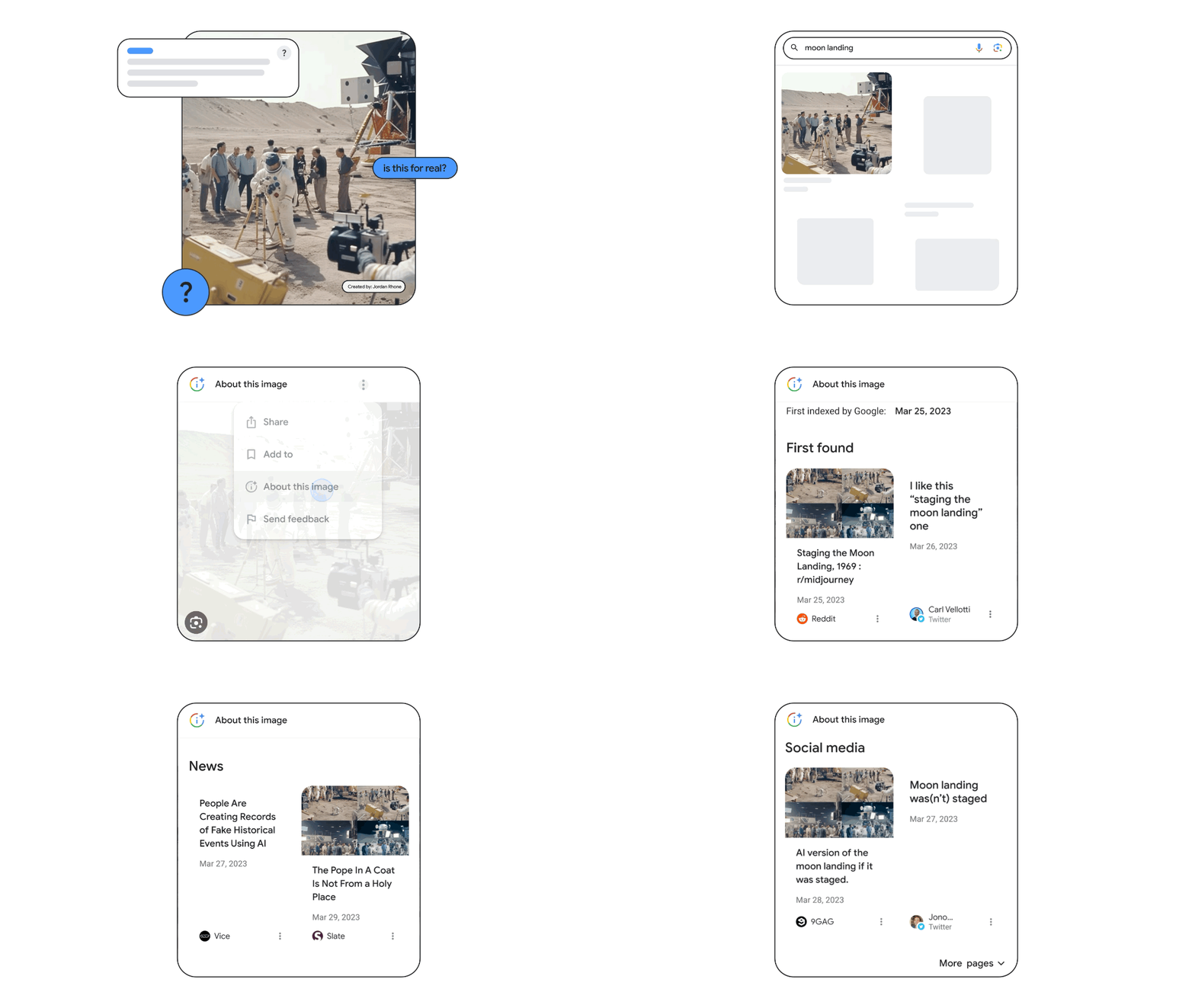
In a blog post published later, James Manyika, Google's SVP for Technology & Society, teased an "About this image tool" in Google Search, which "will provide helpful context such as when and where similar images may have first appeared and where else it’s been seen online, including news, fact checking and social sites."
Look for "About this image" in Chrome and Google Lens later this year, Manyika says.
As for Bard, Google says the chatbot has been upgraded to support over 20 different programming languages, making it a more powerful assistant for those writing computer code.
Meanwhile, extension support for Bard will include numerous third-party brands such as Walmart, Spotify, and Uber Eats. In a demo, Google showed the support means Bard can direct a service, such as Adobe Firefly, to produce AI-generated images based on a text prompt.

Bard is already available to US users through public testing. But at Google I/O, the company said it’s opening access to Bard to over 180 countries and territories. In addition, Bard is adding support for Japanese and Korean with the goal of offering 40 other languages soon. Like Microsoft's rival Bing AI, Google has also dropped the waitlist to access Bard.