

(Photo by Justin Sullivan/Getty Images)
Renting a car or buying a movie ticket online can often require multiple online forms, but Google is working on streamlining the process with the help of artificial intelligence.
CEO Sundar Pichai demoed the technology, an expansion of Google's Duplex system, at the company's annual I/O developer conference by asking it to help a user rent a car for an upcoming trip.
With a voice command, the AI powering the system searched through the person's Google Calendar and Gmail to learn the dates of their trip. After the desired vehicle was chosen, the AI filled out all the details needed to book the car through the National Car rental site, such as the full name and email address.
"You can confirm the details with just a tap, and then the assistant continues to navigate the site. It even selects which car you like," Pichai said.
At last year's I/O, Google demoed how Duplex can make restaurant reservations over the phone. It can now make restaurant reservations in 44 US states, but that's just a first step. "We are now moving beyond voice and extending Duplex to tasks on the web," Pichai said.
For now, Google's focus is making Duplex capable of fulfilling car rentals and buying movie tickets. Look for more details later this year.
Augmented Reality Google Search Results
This being Google, today's I/O keynote also touched on the future of search. Going forward, your Google queries will return more than just 2D flat pictures, as the company is working on making more of its results available as 3D augmented reality images.


The technology will allow you to view AR-created images of your Google searches via a smartphone's camera. For instance, search for a "Great White Shark" and view a picture of the animal in 3D. You can then take things further by projecting a lifelike view of the shark from your phone's camera.
"It's one thing to read a fact, like a Great White can be anywhere from 17 feet to 21 feet long, but to see it in front of you… that is truly understanding its scale," said Aparna Chennapragada, Google VP and General Manager for Camera and AR product.

Aparna Chennapragada (Photo by Justin Sullivan/Getty Images)
Expect the AR-powered search results to begin arriving later this month. Google is also applying the same concept to queries relating to consumer products. For example, you'll be able to search for shoes and view lifelike replicas of the gear on your phone in augmented reality. The plan is to partner with vendors such as Samsung, Target, and Volvo on the content.
Improving Google Lens
The company also talked about enhancements to Google Lens, a mobile app that conduct Google searches via your smartphone's camera. Just point your phone at an object, like a piece of clothing, and the app can find similar-looking items online.
At Google I/O, the company announced that, eventually, you'll be able to aim it at a restaurant's menu and the app will highlight which dishes are the most popular based on reviews from Google Maps.
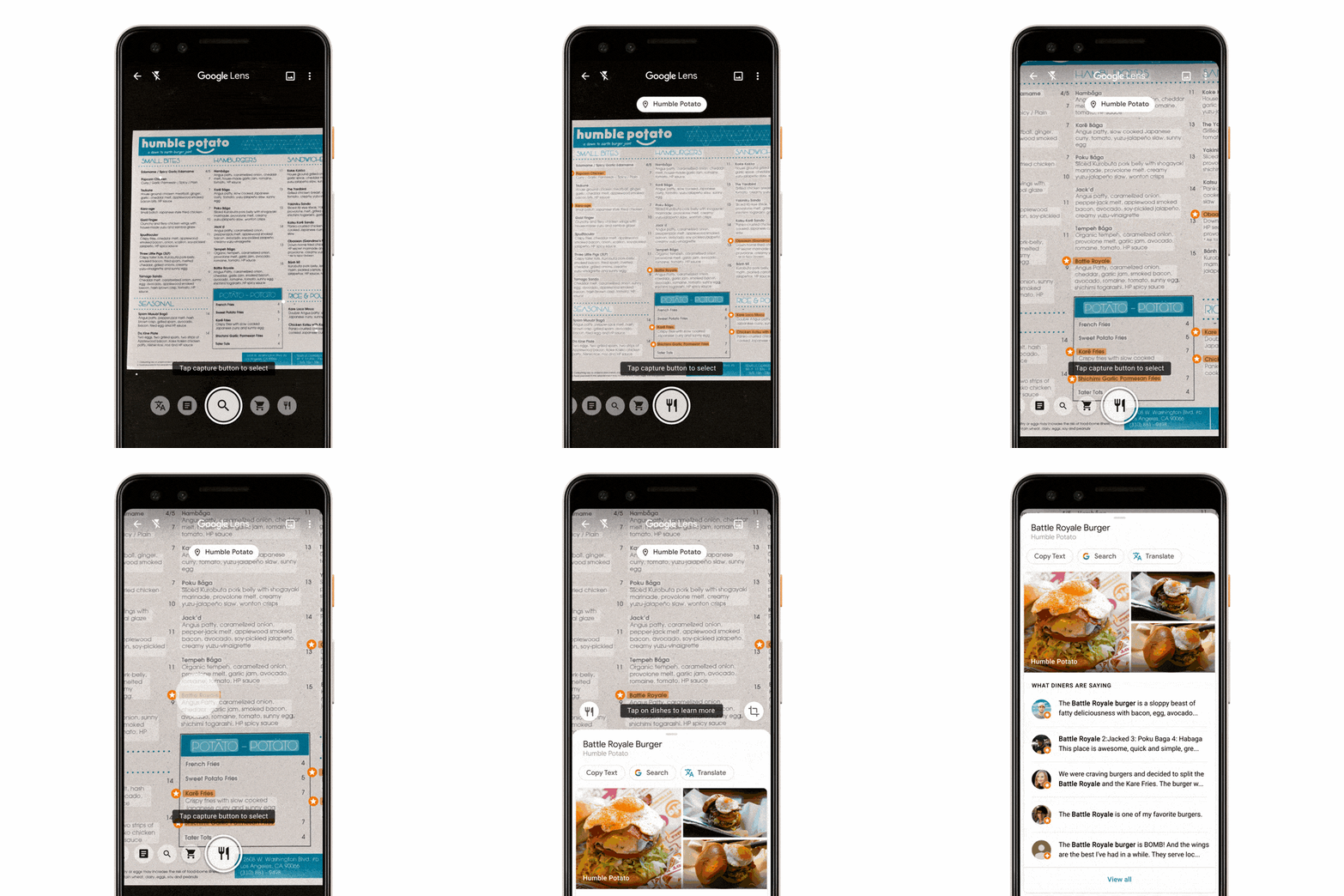
You'll then be able to tap on a menu item and see what the dish actually looks like according to the online reviews. At the end of the meal, Google Lens will also be able to calculate the tip. Simply scan the receipt, and the app will do the math.
Another powerful feature coming to Google Lens is language translation. Simply point your phone at some foreign language text, and Google Lens will translate it and also overlay the translation on top of the original words. It's unclear when the features will arrive.
